Health and Safety Policy — House Clearance Eltham
Scope and commitment: This policy sets out the health, safety and environmental standards for our house clearance and waste removal activities. It applies to all staff, contractors and anyone engaged by the company while carrying out domestic or commercial clearances across our rubbish collection service area. The organisation is committed to preventing injury and ill-health, protecting the public and property, and ensuring safe handling, transport and disposal of materials in line with statutory obligations and best practice.Responsibilities and organisation
The responsibility for implementing this policy is shared: senior management will ensure adequate resources and oversight; supervisors will coordinate safe operations on site; and every operative is required to work safely and report hazards. All employees must complete induction and regular refresher training tailored to house clearance duties, including manual handling, hazardous waste awareness and vehicle safety. Eltham house clearance teams will be trained to recognise risks specific to domestic clearances such as fly-tipped waste, sharps and hidden asbestos-containing materials.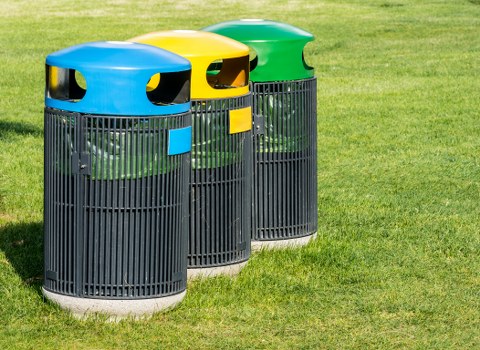
Risk assessment and safe systems of work
Before any clearance, a recorded risk assessment will be completed that identifies site-specific hazards and control measures. Safe systems of work (SSOW) will cover: site setup, safe access and egress, control of traffic and pedestrians, segregation of waste streams, use of PPE and required permit checks. House clearance services must only proceed when residual risks are reduced to an acceptable level and when suitable equipment (trolleys, lifting aids, sack trucks) is available to minimise manual handling injuries.Containers, waste handling and segregation are crucial to safety and environmental protection. Hazardous items such as batteries, solvents, paint, asbestos suspect materials and electrical waste (WEEE) shall be identified, isolated and handled in accordance with statutory guidance. Our rubbish removal procedures require segregation at source where possible to minimise contamination and facilitate recycling. Staff must not attempt to transport or open sealed containers of unknown liquids; in such cases, specialist removal and disposal will be arranged.
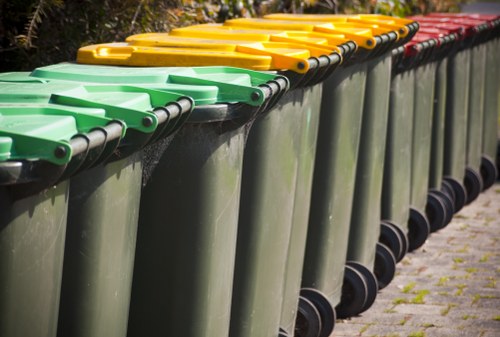 Vehicle and site transport safety: Vehicles used for clearances must be inspected at the start and end of each shift. Loads must be secured, covered and within weight limits to prevent shifting or spillage during transit. Drivers and operatives must follow safe driving practices, comply with tachograph and rest regulations where applicable, and use appropriate PPE when loading and unloading. Our rubbish company service area policy emphasises safe parking, avoidance of pavement obstruction and minimizing disturbance to neighbours and public thoroughfares.
Personal protective equipment (PPE) and medical readiness are mandatory: hard hats, gloves, high-visibility clothing, safety footwear and dust masks or respirators (where dust or fibres are present) must be available and used. First aid kits and an appointed first aider will be present at larger jobs. Operatives must be fit for duty; anyone unwell or under medication affecting performance should not undertake clearance tasks. Regular health monitoring and vaccination advice will be provided where occupational risks indicate need.
Controls and procedures include:
- Pre-work checks: site survey, risk assessment record and client brief.
- Manual handling controls: team lifts, mechanical aids and staged breaks.
- Waste classification: segregation of recyclables, reuse items and hazardous waste.
- PPE policy: mandatory PPE issued and maintained by employer.
- Incident reporting: immediate notification, recording and investigation.
Compliance, permits and disposal: All disposals will comply with environmental regulations. Waste transfer notes, consignment notes for hazardous waste and records of recycling will be maintained for audit purposes. Subcontractors used for specialized disposal must demonstrate equivalent health and safety standards and valid permits. The company will not knowingly permit illegal fly-tipping or unauthorised disposal methods and will take corrective action if non-compliance is identified.
 Incident management, emergency response and reporting: All accidents, injuries, near misses and dangerous occurrences must be reported immediately and recorded. A formal investigation will determine root cause and corrective measures to prevent recurrence. Emergency arrangements include contact protocols for emergency services, evacuation procedures, incident scene preservation and securing hazardous material until specialists arrive. Employees will be supported through return-to-work procedures and any necessary adjustments following injury.
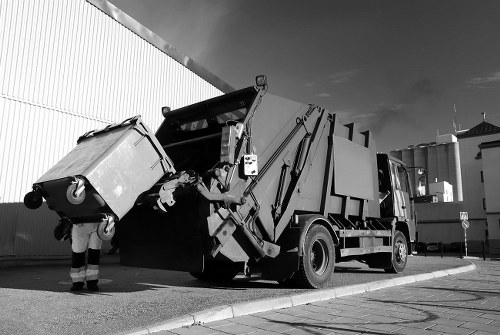 Training, review and continuous improvement: The policy will be communicated to all employees, displayed where visible and included in induction materials. Regular training, toolbox talks and competency checks will be scheduled. The health and safety performance of our house clearance company will be reviewed at least annually or after significant changes in operations. Performance indicators include incident rates, audit findings, training completion rates and client safety observations. Management will set objectives for continuous improvement and report progress internally.
Policy review and acceptance: This health and safety policy is a controlled document and will be reviewed periodically to reflect legislative changes, lessons learned from incidents and improvements in clearance methods and equipment. All staff are expected to co-operate with the policy, to promote a safe working environment and to ensure that our household clearance and rubbish removal services are carried out with the highest regard for safety, health and the environment. By adhering to these principles, we protect people, property and the wider community while delivering reliable clearance services.